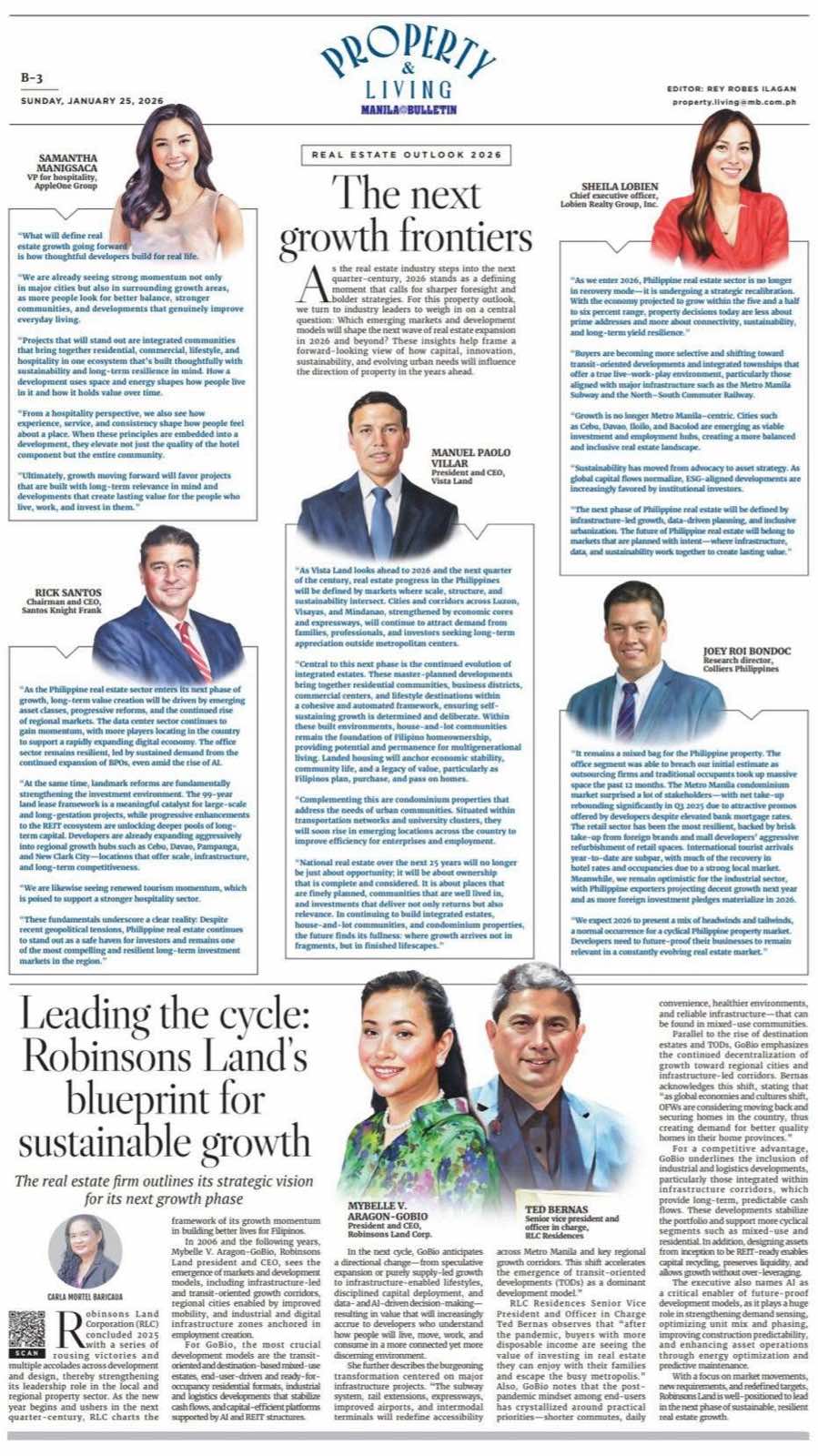
As we enter 2026, the Philippine real estate sector is no longer in recovery mode—it is undergoing a strategic recalibration. With the economy projected to grow within the 5.5 to six percent range, property decisions today are less about prime addresses and more about connectivity, sustainability, and long-term yield resilience.
Buyers are becoming more selective and shifting toward transit-oriented developments and integrated townships that offer a true live-work-play environment, particularly those aligned with major infrastructure such as the Metro Manila Subway and the North–South Commuter Railway.
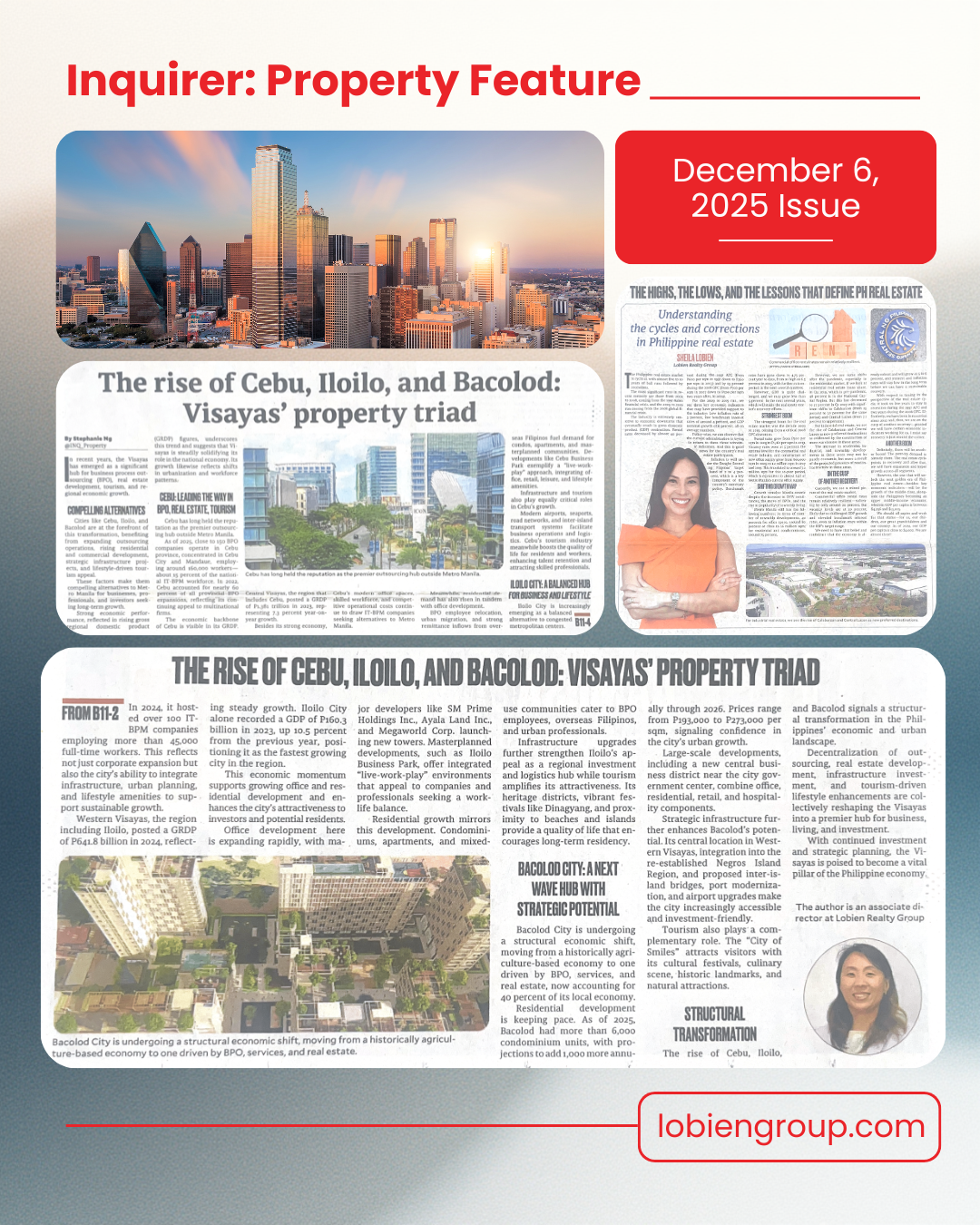
Growth is no longer Metro Manila–centric. Cities such as Cebu, Davao, Iloilo, and Bacolod are emerging as viable investment and employment hubs, creating a more balanced and inclusive real estate landscape.
Sustainability has moved from advocacy to asset strategy. As global capital flows normalize, ESG-aligned developments are increasingly favored by institutional investors.
The next phase of Philippine real estate will be defined by infrastructure-led growth, data- driven planning, and inclusive urbanization. The future of Philippine real estate will belong to markets that are planned with intent—where infrastructure, data, and sustainability work together to create lasting value.
Read more here:
https://mb.com.ph/2026/04/11/real-estate-outlook-2026-the-next-growth-frontiers?shem=dsdf,sharefoc,agadiscoversdl,,sh/x/discover/m1/4